Showing posts with label cinematographer. Show all posts

Thursday, November 17, 2016

How I Made My Biggest Short Film in Three Days


How do you film a 20 minute epic fantasy adventure short film in three days with no budget while you’re in school? 

If you said blackmail, slave labor, or sell your soul to the devil, then you're a horrible person. Also, you are probably a filmmaker. Also, have you been reading my notes?

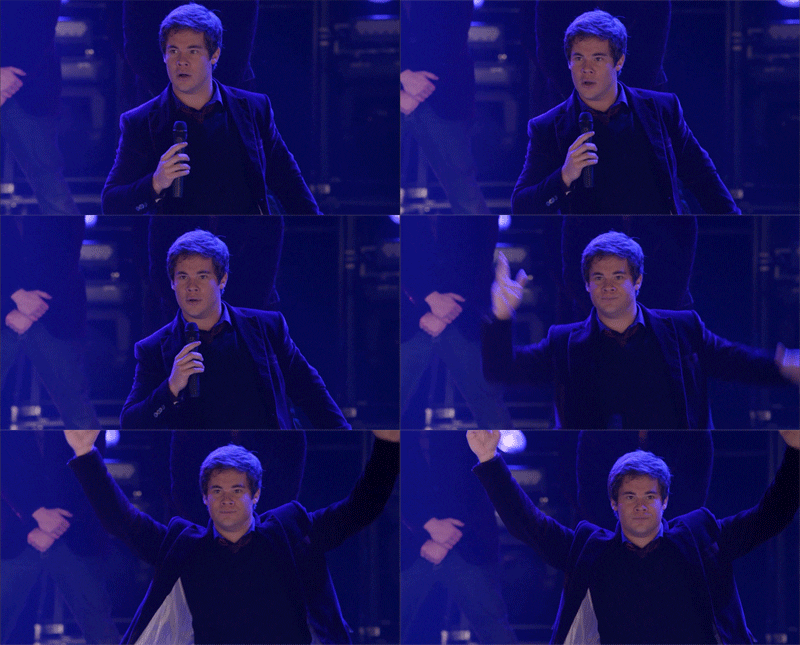
Also, can I introduce you to this guy?

(If you didn’t get that joke it means you haven’t seen the short film yet. Which you can rectify below and then read it again to laugh uproariously. )

I did this question back when I made my last student film Happy Never After. After filming my previous film over six weekends in a schedule that made everyone involved hate life (and me) and pray for the I they knew would not come I decided to try a different strategy: one, breakneck pace weekend where we work like crazy and get everything done. As crazy as it sounded--and it sounded Joker, Annie Wilkies, and Norman bates on a road trip in a stopped car crazy--it worked. What I learned helped me learn the best ways to use your time best to get the most from your crew in the shortest amount of time.

1. Preplan, preplan, preplan.


Everything that went right that weekend went well because we pre-planned things well. Everything that went wrong went wrong because we didn’t pre-plan enough. The Cinematographer, Forest Erwin, and I went over the vision for the look of the film and the shots and scenes beforehand so we knew exactly what we were shooting, where, when, and for how long. We figured out we could save so much time if we divided our shoot into everything we filmed in the FiDi (Ron/Sarah’s coffee meeting, flashback, walk by the water) Day 1, the chapel scene Day 2, and everything else in Brooklyn (zombie chase, funeral, party) Day 3. This served us amazingly well. This meant everyone knew where they should be when and for how long and could plan their other stuff accordingly.

2. Have dedicated people.


You can’t convince people to give up so much of their weekend for free unless they really want to be there. Nobody will do it unless they really like you or really like your idea. Fortunately, I had both. I had made a lot of amazing friends while at school who wanted to work with me, and a great script I'd written that people loved. My cinematographer was excited about the project, my actor friends were excited about it. Everyone wanted to make it work and so they put in the work to make sure it did. They even convinced their friends and family to be on the project too. Most of the extras where there because of our line-producer, Deryka Tso. We got the church because of Forest. If they didn't, the movie could not have happened. So make friends and have a good script is the lesson here. 

Was it hard? It was hard, but selling your soul to the devil is more costly in the long run. 

Don't ask me how I know.

What say you? What are stories you have about making a film at a breakneck pace on no budget? Let me know in the comments.


Friday, October 21, 2016

How (I Learned) to Make a Christian Film (So Far)


In case you didn't know, I am a Christian. That being the case, I always wanted to make a film that talked about the things I love about God, I.E. a "Christian" film. But I was always afraid of doing it badly because that was the unfortunate reputation of Christian films. Even so, I finally got up the courage to go for it and in the process I learned a lot about what I think makes a Christian film work and not work.


Since a lot of my fellow Christian filmmakers are right now in an ongoing conversation of the best ways to make Christian films, I thought I would add my two cents to the topic. This is not an exhaustive list and I’ve by no means learned everything. It’s just one more voice in the conversation based on my small bit of experience.

Watch it in the player below and then read on!


Spoilers, ahead, naturally. 

SHARE WHAT YOU LOVE; DON'T TEACH WHAT YOU THINK

One reason I was nervous to make a Christian film was that Christian films have a (somewhat) deserved bad-reputation for being too preachy. Sometimes a Christian film will have a great scene and then they will ruin it with too much talking.  I think this is because the Christians making these films think they’re job is to teach people what to think about God when it's not. Your job is to share what you love about him.


Don't get me wrong, I love this movie, but man the
scene would have been so much better if they'd just
 stopped talking at some point.

Imagine two lunch dates: one is with your mom and the other is with your newly married best friend. Your mom is telling you that you should get married and is listing all the reasons why you should and asking what excuse you have for not being married yet. Your best friend is bubbling over telling you how much they love being married and sharing all the details. The first wants to tell you what to do while the second simply wants to share what they already have. Which of these actually makes you want to be married? Both make an argument for why you should get married but the latter you actually enjoy and makes you desire it yourself.


My reasons for wanting to make Happy Never After were the latter, and that is the magic switch that made me feel comfortable really talking about faith in film. I knew what it was like to be afraid God wasn’t real in the face of death and I really wanted to share how glad I was that he was real and that he made eternal happy endings possible. 

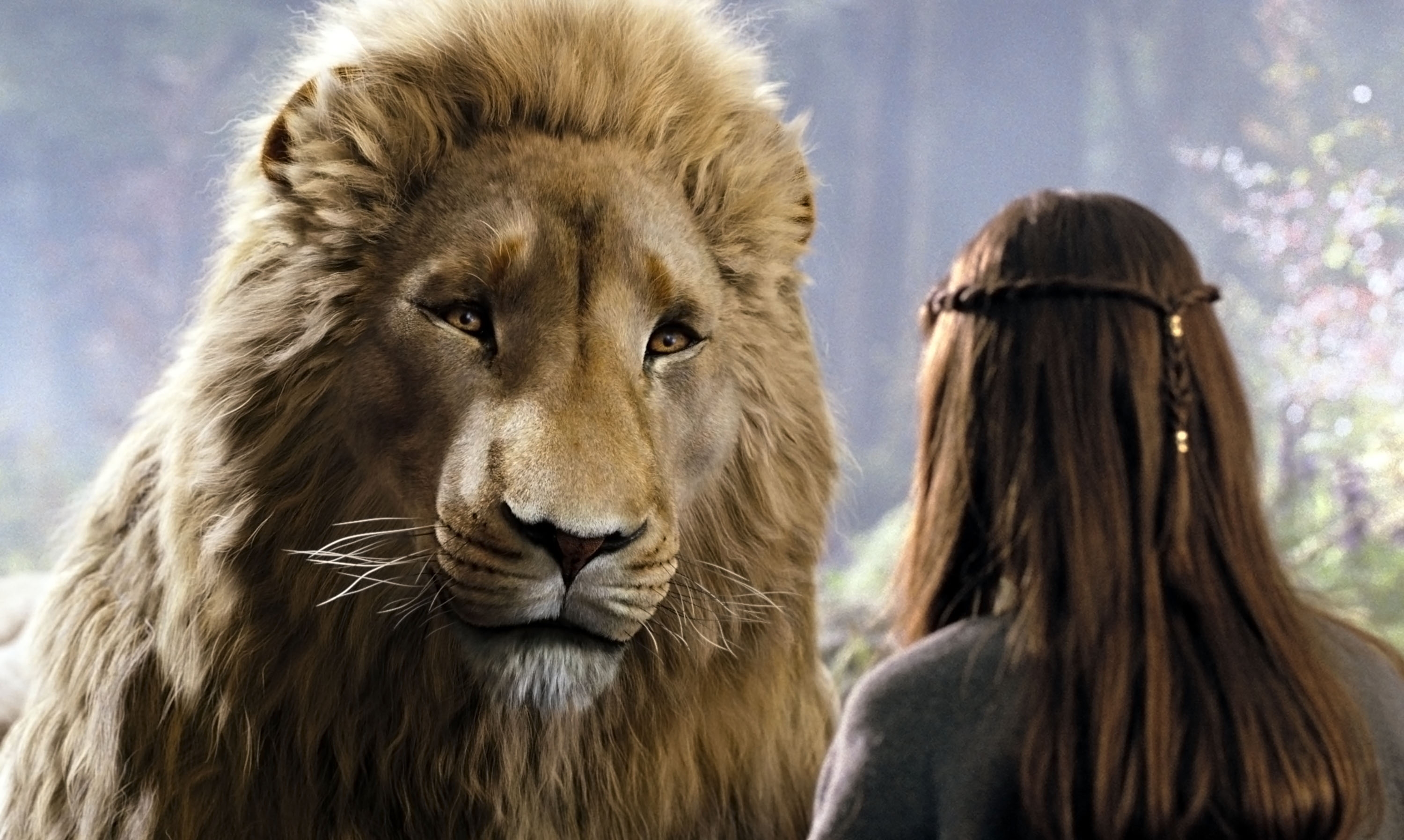
CS Lewis didn’t originally intend Aslan to be part of his Narnia books; he didn’t write the books intending to preach a Christian allegory. Aslan forced his way into the story almost against his will because Jesus was part of CS Lewis’s imagination. That should be a strong model for how we make Christian films too.


SHOW DON’T TELL

This goes back to the preaching thing. Films are—first and foremost—a visual medium. That means the power belongs first in the images and then the words. Christian films often try to preach the Gospel by giving long speeches about it. But really, a picture is worth a thousand words.


I made a concentrated effort to make a lot of the theology visual. In my film, Ron’s “come to Jesus” moment is just a look toward the cross.

Do you think that moment works? Let me know. Regardless, it was my attempt to apply the principle of doing faith it what is a primarily visual medium.

LOVE FILMS FOR FILMS SAKE

This one is not as obvious as it sounds. It’s is not enough to say that Christians should make films that are “high quality”.  You won’t make a really great film unless you are passionate about great filmmaking for itself and not just as a way to get your Christian message to people.


I was blessed that everyone on my project not only loves God, they love great films and great filmmakers. My DP and I would share movie clips to each other from Terrence Malick and David Lowery films to inspire shots in the movie. We all regularly read film education sites like No Film School and watched the amazing film essay series Every Frame a Painting (example in the player below) because they showed us great new ways to make great movies. If you’re a Christian and you aren’t doing that because you enjoy it, you probably should serve God in some other business.


HAVE A THEOLOGY CONSULTANT (OR TWO)

Audiences care both about a good story and a movie staying true to the source material. This means if you're going to appeal to Christians--one of your main audiences--you've got to make sure you're not trampling on Orthodoxy that will unnecessarily cheese people off.


It was important to me that Ron and Mary came back as messengers from God to kill Jacob Applegate at the end. Because I wanted people to feel the thrill of the hero beating the villain to show that obeying God is as thrilling triumph over evil as a typical hero adventure story. But my story editor—Tessa Duckson, as strong Christian--was concerned that this would send the wrong message about God condoning vengeance. We went back and forth and decided that we needed to make clear that was not the case in three ways a) make it clear they are coming back to save Sarah, b) set up their return by having Jacob mention “God send a messenger to strike me dead”, and c) have them wear their hoods while they kill Jacob to emphasize that they are acting on their role from God and not as Ron and Mary.


This turned out to be a blessing because Ron and Mary concealing their faces with hoods and then revealing themselves to Sarah when they pull them off became a very cinematic touch. This goes to show that if you wrestle with orthodoxy you can come up with an even better film than if you just disregard it entirely.


So that's it. I hope, whether you're a Christian or not, you find some of that helpful in this if you ever decide to take a stab at dealing with faith in film. I certainly have much more to learn in that regard. (And I've learned so much more even since then.) And I look forward to being inspired by other great filmmakers--Christian and non-Christian--as I continue to work in this amazing medium that I love.

What have you learned trying to deal with faith in film? Leave a comment and let me know.


Monday, April 11, 2016

Filmmaking 101: Q&A with Cinematographer Ralph Linhardt

Ralph Linhardt


One of the best things you can do when you are trying to do break into the filmmaking world is to find a mentor. Well, I found one in Ralph Linhardt after he came to our school one time. I sat down with him the other day and got some great thoughts from him on what it takes to be the best filmmaker possible. 

What made you decide you wanted to be a cinematographer?

I’m not sure I would say I love working in the film industry.  The hours are very long. The best and worst of you will come out and not always at the right times. You are always fighting to get the near impossible, that is to say, something watchable. But when it does happen, it is magic and it hits you like a freight train. You love the possibility of making something good, so you put up with all the rest. I started as a still photographer when my Dad gave me an old Praktina 35mm camera when I was 11. After High schools I wanted to tell stories. I realized that many of my most emotional experiences had been watching movies so I wanted to join in making those events. I don’t think there is a more effective medium to express thoughts and ideas than movies. I also like being with people. Still photography is a lonely business. I’m still up at dawn to catch the sunrise but with film making they are more people around!

 
Why do you love working in the film industry?

One of my favorite quotes is from the director Joseph Mankiewicz. “A touch of clairvoyance would have come in handy… But you are never clairvoyant… you have no way of knowing, actually, that the film won’t wind up on it’s ass. So you go right on, functioning as you always have. You’ve done your best on the hits; you’ve done your best on the flops, too. In the end, the outcome seems to depend upon a magical intangible that no one has ever been able to define-much less control. I wouldn’t  have it any other way. That intangible is what the theater is all about.”

Many people want to join the film industry but they don’t know what the path looks like. Obviously it is different for everyone. What was your journey like to “making it” in the industry?

When I’ve "made it” I’ll let you know…. More important I think is defining early in your career what “making it” looks like for yourself. For me, I have traveled the world and made more money than I ever thought I would.  My dear wife of 33 years figured we would be starving our whole lives while I chased making films. We are still very happily married and I think our kids mostly like us. But I have not made enough of the kind of films I hoped I would and I don’t feel done yet. So have I made it?… Well I’ve made it this far and I’m very thankful. So far I did not loose the important things like family and self so often lost in the film business. I’ve had a hell of a ride!

What was the best thing you learned in film school?

To get out. And, thank God no one will ever see my student films. With that said, AFI was a very good experience. it was a film business Mini Me! All the same crazy stuff happens out in the professional world.  People at the highest levels of the industry, with every advantage, still make movies that go way over budget and still suck! It’s very hard to make a film.

What do you wish someone else told you before you started working in the film industry?

You can’t control it! You can do your best but there are so many factors that can ruin your film or your career. You do your best work when you are along for the ride. Work on your personal stuff!  See a therapist often!  What ever demons you have, making films will feed them and it won't be pretty! I try to read some of my favorite 14th century Monk before every shoot. Thomas a’ Kempis“The imitation of Christ” it really helps.  Here’s one of my favorites.

BEARING WITH THE FAULTS OF OTHERS

UNTIL God ordains otherwise, a man ought to bear patiently whatever he cannot correct in himself and in others. Consider it better thus -- perhaps to try your patience and to test you, for without such patience and trial your merits are of little account. Nevertheless, under such difficulties you should pray that God will consent to help you bear them calmly.

If, after being admonished once or twice, a person does not amend, do not argue with him but commit the whole matter to God that His will and honor may be furthered in all His servants, for God knows well how to turn evil to good. Try to bear patiently with the defects and infirmities of others, whatever they may be, because you also have many a fault which others must endure.

If you cannot make yourself what you would wish to be, how can you bend others to your will? We want them to be perfect, yet we do not correct our own faults. We wish them to be severely corrected, yet we will not correct ourselves. Their great liberty displeases us, yet we would not be denied what we ask. We would have them bound by laws, yet we will allow ourselves to be restrained in nothing. Hence, it is clear how seldom we think of others as we do of ourselves.

If all were perfect, what should we have to suffer from others for God's sake? But God has so ordained, that we may learn to bear with one another's burdens, for there is no man without fault, no man without burden, no man sufficient to himself nor wise enough. Hence we must support one another, console one another, mutually help, counsel, and advise, for the measure of every man's virtue is best revealed in time of adversity -- adversity that does not weaken a man but rather shows what he is.

Wednesday, March 30, 2016

Cinematographer vs Director: Who's Job is it Anyway?


People told me I was doing the cinematographer’s job.

I was between shoots on making a short film when that night my editor informed me people on the shoot were calling me a control freak. Like, everyone was. Not just a few people. But everyone. I was confused, because I had actually given a lot of leeway and given up a lot of what I wanted since other people had really good ideas. So I didn’t understand what he meant.

Turns out that people were expecting that as director I should only have a broad vision of what I wanted and that the cinematographer would be in charge of deciding specific shots. The fact I wasn’t doing that made me a control freak.


I was like… says who? Anytime you hear about someone critiquing a director’s work, they talk about shot choices. Wes Anderson’s whole style is built on—among other things—style of shot choices.

But some of these people were more experienced than I was. And I didn’t want to cause any problems. So the rest of the shoot I laid off some.

But I wasn’t done with this. I immediately began doing research online about the particular divisions of roles between director and cinematographer. It didn’t take long for me to find several interviews on the subject. And they all validated my assumptions but also taught me new things.

Ideally, the director and cinematographer are collaborators on shots. Ideally. But ultimately the director is in charge and what he says goes. Regardless, the most important thing is that the director and cinematographer work out the shot list before you start shooting. That is the piece that my friends were getting right. You should be—basically—letting the DP alone to do his job on the shooting day. He’s an amazing craftsman who knows his job better than you. That’s assuming, of course, that your cinematographer’s actually read the shot list or script before filming that day. Which ours hadn’t. Still, it gave me a good sense of what I did wrong and what I could correct for the future.

Still. This was the internet. I preferred better confirmation.

Not long after, long-time cinematography veteran Ralph Linhardt came to my school for a private chat with our big aspiring filmmakers. There, one of my school’s minor celebrity student cinematographers asked: “What happens when you’re working for a director who wants the shot done a specific way, but you know it would be a better way? What can you do?”

Ralph said: “Ultimately, he’s the director. It’s his film. If he doesn’t know what he’s doing and you can’t deal with that you just probably shouldn’t work with him.”

Did I find this slightly gratifying? Yes.


So directors, make sure you respect our cinematographer enough to get them on board with your vision before shooting. DPs: make sure you can live with the director you have.

And have a breathing professional and internet army on your side.


Wednesday, March 23, 2016

How to Get Free (or Cheap) Equipment for Your Film

This is the face of a man who spent all his money on film equipment.

Making films is expensive because you need expensive equipment to make your product. You can’t just use a paintbrush and easel, or music and your feet. Like I said in my first blog post, making a movie without a camera is like making ice cream without milk. Without milk you are not making ice cream. You may be making sorbet, which is great, but it’s not ice cream. If you want to make sorbet, you can ignore the rest of the post. For the rest of you, read on.

Now I’m hungry.

Good quality in production is the difference between being considered a professional and an amateur. If, like me when starting out, you are poor and unknowledgeable and technically illiterate and poor (and don’t forget poor), here is what I learned about getting the best equipment possible.

SCHOOL


I was very particular about my choice of colleges. Particularly the location of the college. Specifically, I wanted to live in New York City, because, although I didn’t know that New York City was the independent filmmaking capitol of the world, I knew it was pretty darn close to it.

It was a big move. But it was one of the best decisions I ever made.

My college is not a film school. But one of the great things about it is it does have a media lab for the film students. Until recently it was run by students and gave them great on-the-job training. (I wish I had taken more advantage of it. But that’s another blog post.) If you have the opportunity to go to a film school or a school that has a good media lab, take advantage of that in every way you can.

Not everyone has the choice to go to a college in NYC like I did. I recognize that this was a blessing that I am grateful for.

But that’s another blog post.

FRIENDS


I will go back to this again and again. Having film friends is important. Having friends is important in general. (Shout out Aristotle so I make my philosophy professor proud.) But when it comes to getting the best equipment, friends are irreplaceable for four reasons: 1. they will tell you what you should be looking for when you buy your own equipment, 2. you can borrow their equipment, 3. they will teach you the tricks they know, and 4. they might let you buy it off them for a cheaper price. Aside from what I used from the school, all of my films where shot one or more of these four ways.

If you want to make film friends. It is also helpful to live in New York City (or LA, but that’s a bit more the Hollywood scene than independent). Because there are so many film nerds there. You have a higher chance of making those connections here.

Basically, live in New York City is the lesson here.

RESEARCH/GRANTS


Finally, the best thing you can do—if all these fail, and even if they don’t—is learn to do your own research. The internet is full of places that you can look at to give you the best deals or give you advice on. Look at amazon, look at craigslist dealers. Find the equipment that have the best reviews and within your price range and experiment as best you can. Research grants to fund your projects so you can get the top notch stuff. This is tough to do on your own and could take some expensive trial and error. (Grants less so.) I have never been good at research and experimenting, and that has held me back. If you can have a friend who can walk you through this it will be a better.

And there you have it. That’s how I learned to get the equipment I need. How about you? Any other tips you’ve learned on how to get access to good equipment on your films? Comment below.

If you’ll excuse me, it’s time to make some ice cream.


Why You Need to Learn to Film By Yourself


Robert Rodriguez once said, "If you're just creative, you'll always have to rely on technical people. If you're creative and technical, you're unstoppable." I’ve learned that lesson the hard way many, many times. Technical skills was where I was weakest for a long time, and that disqualified me from a lot of opportunities.

Basically this is my humble pie post. Or, one of my humble pie post. Well, basically this entire blog is my humble pie post. Basically my whole life is one meal of humble pie after the other. It's amazing I've kept this great figure.


There was one time I was hanging out at one of my friend’s comedy shows. A comedian friend of his walked in and talked about how she needed someone to film one of her shows for a reel. My friend told her that I was good at filming and recommended me. It was a paying gig and she offered it to me if she could see my stuff.

I showed her the stuff I did, but she wasn’t sure she should take me because what I shot wasn’t well lit and I wasn’t able to mic up the audience. Lighting and sound were things I wasn’t very good at at the time and I knew it. We talked about it but I told her she should probably find someone else. I felt bad, not just for myself, but for my friend Robert, because he had recommended me.

Why was I weak at this stuff? Partly, I was too busy, I was at an academically strenuous college, was running the filmmaking club, and dealing with family stuff. And technical stuff is not something I am naturally gifted at. It was easier to specialize in the creative side and the organizing side of film and outsource the technical side to most of my projects.

But the problem is nobody needs somebody else creative or with ideas. They have ideas. They need editors, cinematographers to bring their ideas to life. That is what you will get paid for and that is what is going to get your foot in the door with people who can help you later.

The other problem is that—until you pay people—you can’t always get people to do stuff for you. On my first film I had to be cinematographer some days because my other guys didn’t show up. You need to be able to do that yourself when you have to in a pinch. I have had the worst time finding editors who could make the deadlines I needed. That’s nobody’s fault. They had opportunities to do actual paying work and had to put that stuff first. But I wasn’t able to pick up that slack.


Bottom line: learn to do stuff your freaking self. Don’t give yourself excuses. There is a thing called youtube that has tutorial videos. It is a beautiful thing. Use it. Love it. Live it.

Friendship is Magic: Why All Filmmakers Need Film Friends

Yes, this is what my filmmaker crew looks like. What does yours look like?
If you're going to be a filmmaker, you need good filmmaker friends. First, because it just makes life more fun. You all just love film the same way and have a lot of shared experiences. Second, good filmmaker friends hold you accountable and give you the tools you need to do well like no one else.

#1. HOLDING YOU ACCOUNTABLE

“Your camera is shit.”

That was the subtle way my youtuber friend Rachel told me I needed to get a new camera. If you don’t know her, she’s ilovekimpossiblealot, a big deal in the world of My Little Pony Analysis videos. We met through a mutual friend at my school and kept in touch. We’d done a partnership or two in the past. To me, she’s my buddy always willing to give me some tough love.

Don't be deceived. She is fearsome.

Film people are snobs when it comes to the quality of product. And rightfully so. Because the audience is too. They don’t think they do but when they see a bad quality product they respond.

If you are going to be a filmmaker you have no choice but to use the best equipment so you can get the best product.

That’s where my other friend came in.

#2. GIVING YOU DEALS

Starting out, you’re not going to know your way around the equipment you need. You can do research on your own. But there are always going to be people who know more than you and it’s good to utilize them.

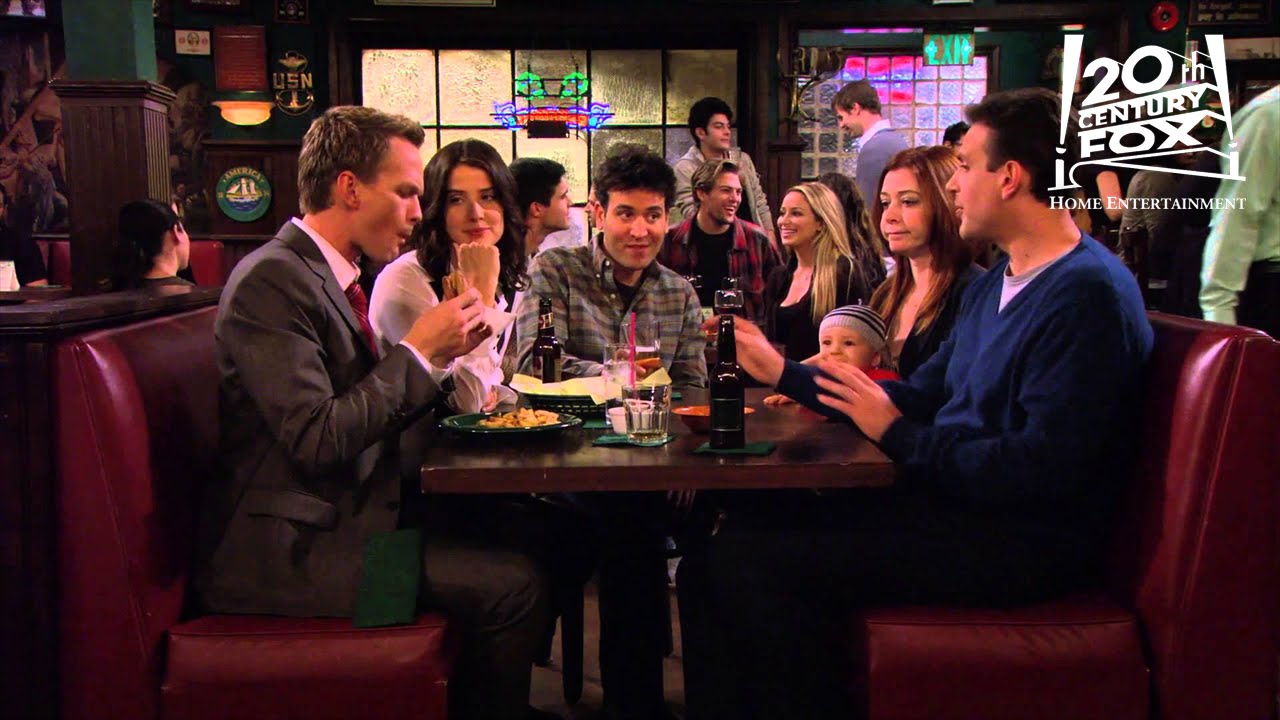
I know this cinematographer who really knows his way around cameras. He’s basically the Batman of the freelance DP world. Only a briefcase of lenses instead of utility belt. 

"I see now what I have to be come to film movies like him..."
He’s got those lenses off craigslist from guys in Russia wherever. We went to school together briefly, had a lot of mutual friends, and worked together on a couple of projects. One time we were chewing the fat before our actresses got there and he mentioned he was selling one of his old cameras and lens packs.

I did not waste a minute offering to buy it.

We negotiated a payment plan and there I had my camera. I’ve used that camera and lenses for project after project since.

#3. THEY RECOMMEND MOVIES

Filmmaker friends also force you to watch important movies you might otherwise not watch but you should. For example, I love lots of types of movies, but the artsy, pretentious films are a harder swallow for me. Even though those movies are important for your development as a filmmaker. 
Thank you, Upstream Color, for being my trump card when I need to explain what I don't like about indie films.

When you have filmmaker friends, if you don’t watch these films, you will spend a bunch of your hearing this:

“You mean you haven’t seen that?”

That gets old real fast. It's a great incentive.

#4. SHARING MOVIES

Even more important that all of these though, is that other filmmaker friends love movies as much as you do. There is a reason you are all in the business you are in. It's because you've seen the magic that film can bring and you appreciate it in the same way.

As you grow up you learn that this is true: there's nothing better than sharing what you love best with others who love it as much as you.

That's why filmmakers really need filmmaker friends. To share that love together.


And there you have it! How about you? What are some ways that having film buddies has helped you make better films? Sound off in the comments below.