Sunday, May 15, 2016

How to Make a Short Film: Explaining Your Vision

How do you, as a filmmaker, communicate your vision?

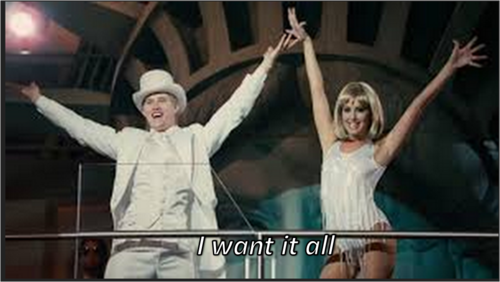
Epic pose with "Kelly" star Rachel Kyle

One of the most important things that a director does when trying to make a short film or any film is communicate his vision. Quentin Tarantino said: As a director ... Your job is explaining your vision. Your job is articulating … what you want on the screen.” If you explain to everyone well what your film is supposed to look like, feel like, be like, then they know how to use their unique creative talents and expertise to make that happen. (A phenomenon I also discuss here.) You don’t have to micromanage every detail for things you don’t know. Like costume design. Do I know the best way to make costumes? No, I do not.

In case you doubted...

But how do you, a budding filmmaker, explain your vision to your team?

The best way I’ve found, as a filmmaker, is use two things they already know. This is actually a very common way to “pitch” films to producers. Sky High was called Harry Potter meets The Incredibles. The Martian was called Castaway in space.

Along with the inevitable Die Hard everywhere combinations

My first short film Kelly vs The Philosophers had such an odd story people had a hard time getting it.

“So it’s an action-comedy about a college student who fights the phantoms of various philosophers she’s studying for class.”

Totally blank expressions.

So I changed tactics. Since it was a video-game eque action comedy and my college was big on classical education, I added this to the pitch.

“It’s like Scott Pilgrim vs The World at our college.”

“Ohhhhh, that sounds really cool!”

Right away that helped me with pre-production. My chief editor Benjamin Capitano made a night of it and went to Midtown Comics and looked through a bunch of Scott Pilgrims and other comics. Then we spent a night watching the movie again. There was popcorn and laughter in the apartment. I can neither confirm nor deny Scott Pilgrim battle reenactments. 

We take our work seriously (Ben, left. Me, right)
This was also helpful with my costume designer, Megan Ristine. Once she knew we were going with a  Scott Pilgrim vibe, she was able to lend her experience to making the outfits believable but over the top—authentic, but with character. The actors also knew where to ground their performance on the realism scale with less coaching. We had such a fun time with it together, laughing about the concept and everyone throwing their own ideas into the pot.


Megan Ristine in her element.


This is the best part as a filmmaker: when you’re all on the same page with the film, it’s not just your vision anymore. It’s all your vision you’re sharing together. Everyone wants to make this movie, not just you. That’s how real communities are formed that last a lifetime. And that is one of the best things you can have when you make a short film, or any film at all.
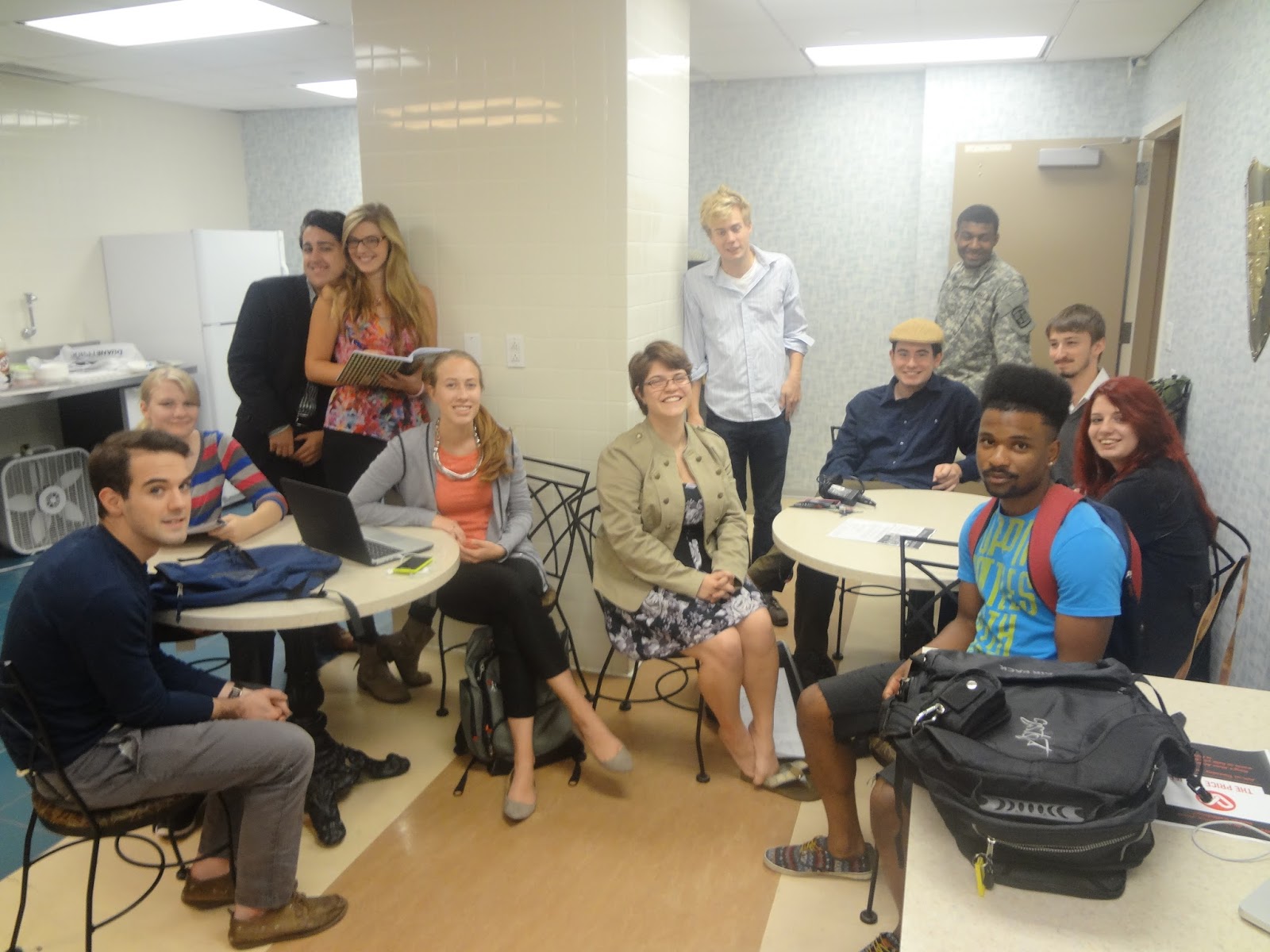
Cast and crew photo. Left to right: Taylor Pope, Jennifer Verzuh, Joshua Shabshis, Hope Epperson, Megan Ristine, Rachel Kyle, EC Hannah, Alex Foley, Bryce Lewis, Brian Stewart, Josh Simons, Lara Jane

Friday, May 6, 2016

Why Being a Filmmaker Might Mean You Don't Like Captain America: Civil War


Does being a good filmmaker mean you won't enjoy films like Captain America: Civil War?

Four years ago, I was about to enter college, I hadn't I started being a filmmaker, it was then I saw what is still one of my favorite films: Marvel’s The Avengers. Now, this year I am about to graduate from college and just saw Captain America: Civil War. A massive disappointment to me. Just like Batman vSuperman. Is it me or is it them?


On the one hand, I think I’m holding both to a consistent filmmaker standard. I've always been super critical of my superhero movies. I hated Spider-Man 3 and Iron Man II and III I am a longtime superhero fanboy and loved Marvel’s the Avengers because it was faithful to the comics: Superheroes being superheroes, bickering, fighting each other, then fighting the common threat. Captain America: Civil War was nothing like the comic book Civil War. The comic book was a dark story about two good men on opposite sides who so believe they’re right they are willing to do whatever it takes to stop the other. Stories that tell deep stories in a compelling way are important to me and I think the superhero genre is capable of doing that and it's sad they aren't. 


But on the other hand, maybe I’ve just changed as a filmmaker. The difference between then and now is that fans and critics agreed that Spider-Man 3 was bad. But critics and audiences love Captain America: Civil War. Yet I don't. Like I’ve written about elsewhere, I have been told by my friends with increasing frequency that I am always disappointed in movies. The first of the Avengers films I was excited at a giant love-letter to superheroes. Have my standards for filmmaking become so high that I can’t enjoy normal movies?

If so, maybe it's worth it. In the past four years I've really grown as a filmmaker. I've made great short films that I'm proud of (like Kelly vs the Philosophers). I've changed as a person. That's what you expect when you go to college.


You may like Captain America: Civil War. But regardless, I think the lesson for aspiring filmmakers is that if you really have the high standards you need to make great films, you’re going to be disappointed in a lot of movies along the way. Which is going to be rough, because we want to make movies because we love watching movies. And it makes it harder to watch movies.

I wanted to love Captain America: Civil War just as much as I loved Avengers all those years ago. But if it means I become a better filmmaker it’s worth it.


Thursday, April 28, 2016

How to Make a Short Film: How to Hold Auditions - What People Don't Tell You

There is nothing that makes you feel more like a real filmmaker to have people audition for your film. I didn’t realize before I started casting Kelly vs The Philosophersabout to make my first short film. When people audition, that means they actually want to be a part of the story you want to tell, to achieve your vision. You feel just a wee little bit like a big shot. Enjoy it. When the filmmaking problems start you’ll get over it.

Left to Right: Taylor Pope, Jennifer Verzuh, Josh Shabshis, Hope Epperson, Megan Restine, Rachel Kyle, EC Hannah, Alex Foley, Bryce Lewis, Brian Stewart, Josh Simons, Lara Jane
When you're a filmmaker make your first short film, here are the things I learned you should look for in an audition that nobody tells you about. Unlike many of my stories, in this case most of what I learned was what I did right.

1. Lead the actors. You should know what you want from the actors communicate that with them clearly. They are depending on you to tell them what you want to see so they can give you their best performance possible.


I told my auditoners that they should bring their own script and that it should show ability to do comedy. Rachel Kyle (who would end up being Kelly in Kelly vs The Philosophers) and her friend Adriana Hanson (who would end up co-writing a script with me) did a two woman show that was really impressive. To help me decide, I told them to do the same audition but in the opposite role. You can see how amazingly that turned out.


2. Always record your audition. I was smart enough—in this case—to know that people look differently on video than they do in real life, so you need to see what they’ll look like on film. That’s in addition to how helpful it is to watch it later if you’re debating between two candidates. Watch Hope Epperson (who would eventually become The Librarian) nail hers below.


3. Ask to see a funny audition. This is more of a personal thing. But I find I learn more about the actor in funny auditions. Humor shows if someone can portray personality, spontaneity, and timing, things that are important in funny or dramatic roles. Of course, in this case I was casting for funny, but in cases of drama, I would still ask for two—one dramatic and one funny.


This is my favorite audition I received. Hope did a second audition with her friend Rebecca Averett and the two of them killed with a self-written parody two-woman show of Willy Wonka. You owe it to yourself to watch this audition and be amazed by these two.

4. Have Friends Who are Great Actors. This is a bit of a cheat. But you need two things when you are casting an actor: someone who’s a great talent and someone with whom you get along. If you have actor friends you know will work for the role that will cut down a lot on stress. Just be sure they really can act. Nothing is worse than casting a friend who’s a bad actor. Happily, Mary Cassella is not one of those.


So that's it! Have you ever held an audition or been in an audition? Tell me any of your stories or lessons in the comments.


Sunday, April 24, 2016

What I Learned at the Tribeca Film Festival

Tribeca Film Festival is something that every aspiring filmmaker loves. For five extra bucks on a ticket (and an hour in line for rush) you get to prove to everyone that you love movies more than everybody else and explain to them perfectly legitimate reasons why your movie didn’t get in but should have. Who cares if you liked the movie? The bragging rights are worth it.

So this year, my first time going, I got all this and also watched movies at Tribeca Film Festival I really liked and helped me improve my craft. Here’s what I learned from the movies I saw.

ADULT LIFE SKILLS – EXECUTION IS EVERYTHING


I loved Norah Ephron and so really wanted to see the movie that got her award this year (given to great female directors). Tribeca Film Festival’s Adult Life Skills was the kind of movie I normally hate, done so well that I really liked it. Few movies irritate me more than dramas about dysfunctional, privileged, dissatisfied people engaging in naval gazing. But this movie had real spunk, creativity, real, legitimate drama, endearing characters and great humor

MY SCIENTOLOGY MOVIE – STYLE SUPPLEMENTS SUBSTANCE


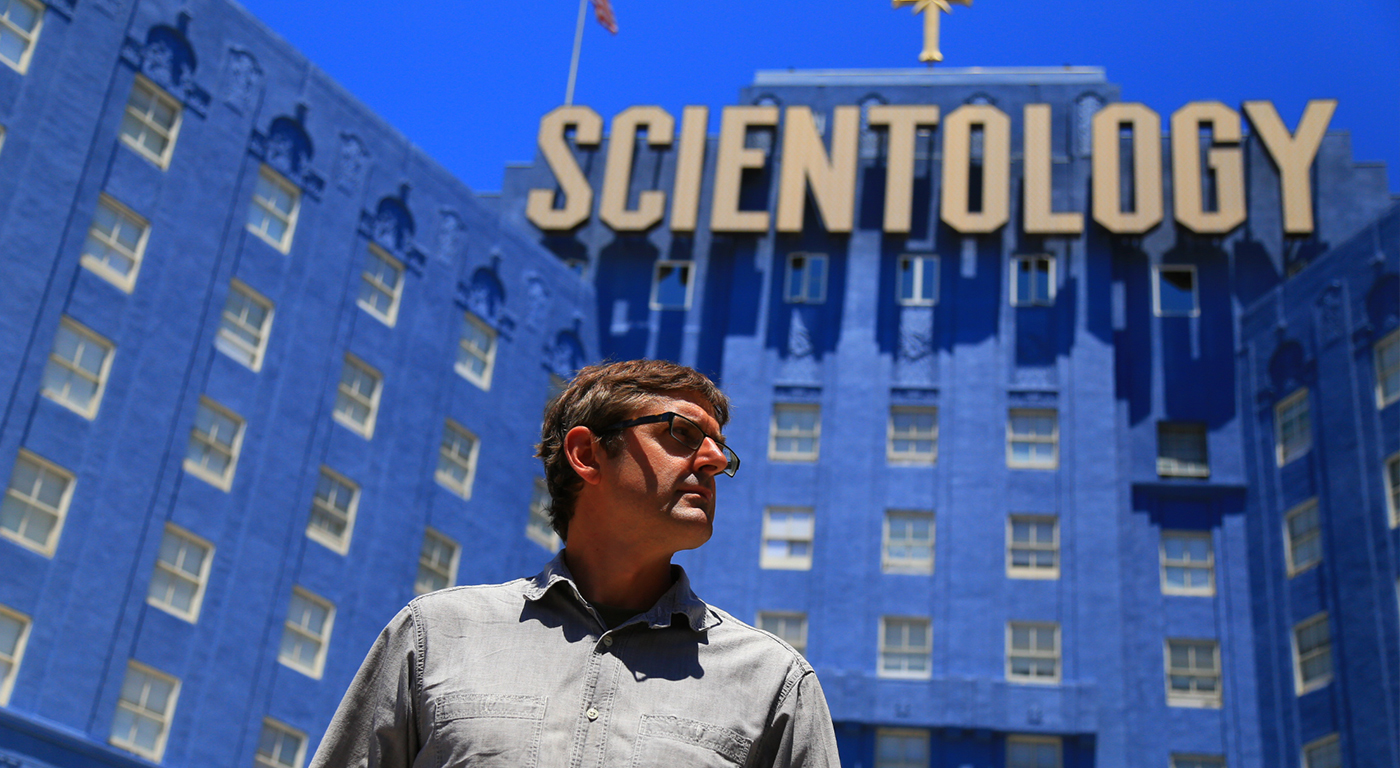
I was interested in this Tribeca Film Festival movie because I’m really interested in knowing more about Scientology. But the movie began with the documentarian admitting that nobody in the church would talk to him, so the whole movie was about he and some ex-Scientologists attempting to re-construct the goings on in the church. There are a lot of good filmmaking tools used. But the best part was when the Scientologists started following them around with video cameras.

SOME THINGS ARE MORE IMPORTANT THAN MOVIES

Waiting in line for Tribeca Film Festival rush tickets to My Scientology Movie I didn’t think I or my friend were going to make it in. There were too many people ahead of us. Then there seemed like a miracle: a lady offered my friend and I a free ticket. My friend insisted I take it even though it meant I might get to go in without her.

Yes, it is totally legitimate to take way too many pictures
of yourself at the film festivals.
But then there was another moral dilemma: behind us we discovered there was a group of friends behind us who all had tickets except for the one friend who would have to stay behind and attempt to get rush tickets. My friend looked at me and told me that I could solve that problem for the lady right there. And reminded me that if my whole group of friends went into see a movie I would be praying someone gave me an extra ticket to join them. I really wanted to see the movie. But I had just heard a sermon on how Christians should be a different kind of community who make different—more generous—choices.

I decided to give her the ticket, trusting that what God willed would happen.

And guess what? My friend and I got in anyway.

Life lesson: movies, and bragging rights about movies are worth the extra five bucks. But loving people is more important. Even more than the Tribeca Film Festival. 


Thursday, April 21, 2016

How to Make a Short Film: Coming Up with the Story

How do you pick the right story when you make your short film?

Aside from using in a bathtub. That is assumed. 
Almost every independent filmmaker has to struggle between telling the story they want to tell and telling the story other people want to watch. Independent filmmaker Hal Hartley told No Film Schoolpeople don't go to movies unless you see sex and violence. So no matter what you are to address …, no one's going to pay attention unless there's a girl and a gun. And so I try to just wrestle with that.” The juggling of these things becomes something of a Faustian bargain between making something meaningful and something enjoyable.


I wanted to challenge myself with my first short film—Kelly vs The Philosophers—to effectively tell a story that was both deep and really fun to watch. Now, I have an advantage because my favorite movies are the ones that have appeal to the elites and the masses, such as Gladiator, Silver-Linings Playbook, Inception and Iron Man. So to me it’s not a Devil’s pact as it is just making the kind of movie I’d like to watch. But that doesn’t mean it’s easy.

The story for Kelly vs The Philosophers came about when my politics professor David Tubbs told the class that we should “struggle” with the philosophers he was assigning us to read. He believed if we argued mentally with what they were saying we would get a lot more out of them than if we just passively accepted or dismissed their ideas. For me, my first thought was? What if I too that idea and had a student literally fight with the philosophers, action-hero style? And what if I played against type and made the action hero an average girl rather than action archetype? From there the ideas came quickly and easily.

Our lineup of philosophers was actually pretty intimidating, right?


The film, when it finally premiered, opened to enthusiastic reactions at my school. Everyone enjoyed it and were—best of all, also—engaged with the ideas. That convinced me that I was on the right track with my self-challenge to make movies that are fun and important.


Four takeaways.

1. Don’t feel like you’re cheapening the story by also having it be fun. You don’t have to be. And it will mean more people will engage with the story you want to tell.

2. Play against type. A lot of the magic of the story came from gender-swapping the lead character from the expected guy to girl. That makes your story a little different and sparks creativity.

3. Know your audience. My college was very into philosophy. So taking an idea that was relevant to the student body meant that the people I would be showing it to could get excited about the idea.

4. Love what you’re telling a story about. I love philosophy and I love action and comedy. These are things that are worth celebrating to me. People love to see other people share what they love with them—even if they don’t already love them. People can tell, and believe me, it’s infectious.


Do you have a story about coming up with a story for your film and what you learned? Sound off in the comments below!

Monday, April 18, 2016

How to Make A Short Film: Finding Your Team

(Left to right: Bryce Lewis, Megan Ristine, Brian Stewart,
 Rachel Kyle, Josh Simons, Taylor Pope, EC Hannah, Alex Foley,
 Hope Epperson, Jennifer Verzuh, Lara Jane, Josh Shabshis)

I wanted to make a short film but I wasn’t going to a filmmaking school.

You need a lot of help to make a really good film. Orson Welles once said, “A poet needs a pen, a painter a brush, and a director an army. To make a short film to start on your filmmaking career you have to find a way to convince other people to join in with you. The people you have around you is going to very a lot so you need to know who’s in your circle and why they might agree to work on your project.

Orson Welles could get pretty bitter about the film industry. Later on he said: "I think I made 
essentially a mistake in staying  in movies but it’s a mistake I can’t regret because it’s like saying 
I shouldn't have stayed married to that woman but I did because I love her."
The spring of my freshman year I was talking to prospective students who might be coming next year. Everybody I was talking to wanting to go into filmmaking. Seemed to me there might be a market for someone to start a filmmaking club. We had one for theater. Why not this?

First thing I needed was to test to see if there really was interest in making short films. I came up with a story and hammered out a script. (Which became Kelly vs The Philosophers) Then I started asking around to the people I knew and people I thought might be interested

1. Theater crowd.

2. Filmmaker crowd.

3. Any Friends.

4. General advertisement to student body.

Immediately I got a lot of filmmaking interest in the general call for cast and crew, which made me very happy. I called up one of my friends who I had specifically in mind for the role of Machiavelli: Alex Foley, a guy who, if you knew him, you’d know why he was instantly the one I wanted for that role. I messaged him and he immediately and enthusiastically agreed. Another friend I had in mind to be my editor—Benjamin Capitano--I didn’t have to even ask; the minute he got wind it was happening, he jumped on it. Which I was really glad about because he was—and is—so amazingly talented.

 (Here Alex Foley is in another video series he starred in that I made--just to give you an idea.)

My filmmaking resources were the fact that I was going to a school where—although it was not a film school per-se—it was full of people who were interested in the arts and film. More than that, everyone I knew was a doer who liked to pull together a do things and do them well—whether that was to make a short film or not. So what are yours? Make a list of the ones you’ve got.

Do you have any stories about getting started on your filmmaking career or getting to make your first short film? Tell me in the comments. And stay tuned for more lessons I learned working on Kelly vs The Philosophers.


Tuesday, April 12, 2016

How to Make a Short Film: Kelly vs The Philosophers


I often dreamed of making films. But like my goal to one day have superpowers they were just that: dreams. That is until college when I finally decided to put my money where my mouth was. (For film. Still waiting on the superpowers.) That’s where I made my first short film: Kelly vs The Philosophers. I didn’t have any experience filmmaking or making a short film. I wasn’t at a film school. But I knew this was what I wanted to do. So I decided to go for it.

IS THERE A MARKET?

First thing to make a short film I had to do was figure out if there was even interest in making films at this school. I had to gauge interest with my friends, filmmaking lovers at the school I knew, and the student body in general. I had to see if there were enough people who were willing to put the work into it. Check.

GETTING THE STORY RIGHT

Second I had to make sure I had a story worth telling. That wasn’t hard to do, as I love telling stories and always have ones that I believe should be told. I’m really interested in making films that talkabout important ideas in a fun way. Since my school was heavy into philosophy I decided to do an action-comedy about a girl fighting philosophers.

(Left to right: Bryce Lewis, Megan Ristine, Brian Stewart,
 Rachel Kyle, Josh Simons, Taylor Pope, EC Hannah, Alex Foley,
 Hope Epperson, Jennifer Verzuh, Lara Jane, Josh Shabshis)

ORGANIZING PRE-PRODUCTION

Then was the actual organizing and running of pre-production. To make this short film I needed to audition actors, be able to explain my vision, have a library to film in. I needed to have costumes (and therefore an amazing costume designer). I needed to co-ordinate schedules for filming days. Shouldn’t be any problem, right?

DEALING WITH CONFLICT

I had my first big conflict in this film too during pre-production. The person never did any work and kept demanding we move the date back. Eventually that issue resolved itself, but it taught me that this was something that was going to happen and I was going to have to learn to deal with it. 

FILMING 

First day making the short film was chaotic and stressful because I hadn’t put enough time into making sure pre-production was organized enough. But everyone was really good and pulled together and it worked out amazingly. But it still took way longer than it would have. Put a lot of time into that pre-production, boys. Things will go a lot smoother.


Close calls like this were very common on set


EDITING THE FILM

Once filming the short film was done, editing began. I was blessed to work with an amazing editor who helped turn all the bits of filmmaking footage into something magical. Making sure that you and your editor are on the same page with the vision will make sure he or she are able to be creative while still making the film you want.

PREMIERING THE FILM


After that, we set the premiere date for the film. A lot of people weren’t sure how good the short film was going to end up being. But the film ended with roaring applause from the audience. 

Now, three years later, that film has launched a filmmaking club that is preparing to have it's first year without me leading it and three more films.  That’s where my filmmaking journey kicked off and I’ve never looked back.

Watch the final film below and let me know what you think!